After a root canal, your tooth often becomes more brittle and loses internal support. Blaine dentists commonly recommend a tooth crown in Blaine, WA to protect it from fracture and restore full function.
A crown seals and strengthens the treated tooth. This helps you avoid future pain, costly repairs, or tooth loss.
You’ll learn why endodontically treated teeth change structurally, how crowns distribute chewing forces, and what local dentists in Blaine typically advise. You’ll also see which options and timing make the most sense for your mouth and budget.
This article walks through the practical choices you’ll face—materials, process, costs, maintenance, and what to expect if you consider alternatives. You can decide with confidence.
Table of Contents
ToggleUnderstanding Root Canal Therapy
Root canal therapy removes infected or damaged dental pulp, stops pain and infection, and preserves the remaining tooth structure for chewing and esthetics. The following sections explain what the treatment does, common outcomes you can expect, and what can happen if you do not restore the tooth after treatment.
Purpose and Procedure
Root canal therapy targets the soft tissue (pulp) inside a tooth when bacteria, deep decay, cracks, or trauma cause infection or irreversible inflammation. Your dentist or endodontist first takes X-rays to map root anatomy, then administers local anesthesia to keep the procedure painless.
They create a small access opening, remove infected pulp, clean and shape the canals with files, irrigate to disinfect, and place a biocompatible filling (usually gutta-percha) to seal each canal. A temporary or permanent filling seals the access afterward.
If the tooth had extensive decay or structural loss, the provider may place a post or core to rebuild the tooth before a final restoration. Typical treatment time ranges from one to two visits, depending on canal complexity.
Common Outcomes
After successful root canal therapy, pain and sensitivity usually resolve within days. You should be able to bite and chew normally once a definitive restoration (filling or crown) is placed and healing is complete.
Radiographic follow-up typically shows reduction of any pre-existing periapical (root-tip) radiolucency over months, indicating infection resolution. Longevity varies with tooth location and restoration quality.
Molars need stronger restorations because they endure higher chewing forces. With proper restoration and oral hygiene, many root canal–treated teeth remain functional for years or decades.
Potential Risks Without Additional Restoration
A tooth that has had root canal therapy loses internal support and becomes more brittle, especially if substantial coronal tooth structure was removed. Without a protective restoration—most commonly a crown on back teeth—you face higher risks of vertical root fracture, cusp fracture, or recurrent decay at weakened margins.
If a treated tooth fractures or develops new decay, retreatment or extraction may become necessary. Placing a final restoration within a few weeks of endodontic therapy reduces the chance of contamination or structural failure.
Structural Changes After Root Canal
Root canal treatment removes infected pulp and reshapes internal canals, which changes the tooth’s internal support and reduces moisture. These changes make the tooth more vulnerable to force and require protective planning.
Weakened Tooth Anatomy
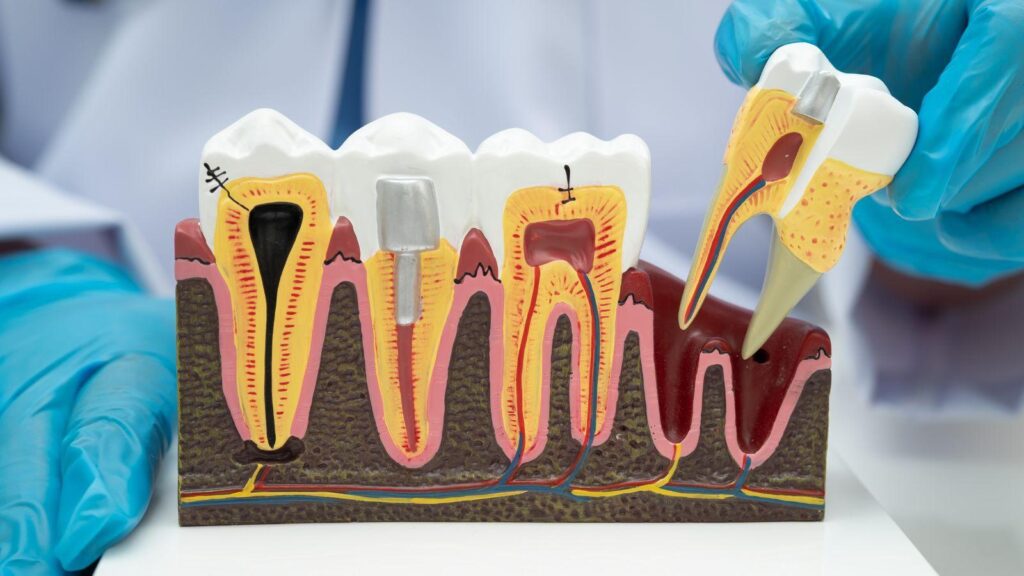
When your dentist removes pulp tissue, they also remove internal tooth structure to access and clean the canals. That removal thins dentin walls and enlarges canal spaces, leaving less natural material to resist chewing forces.
Teeth with large existing restorations, cracks, or deep decay lose even more structural integrity during access and shaping. You may also receive a post or core to rebuild the tooth.
While a properly placed post can restore retention for a final crown, it does not replace lost dentin and can create stress points if the post is oversized or placed without enough remaining tooth structure. Practical things to watch for: increased sensitivity to lateral pressure, visible discoloration, and difficulty biting on that side.
These signs often indicate the need for a full-coverage crown to protect what remains of the tooth.
Susceptibility to Fracture
A tooth that has had a root canal functions like a hollowed shell. It lacks the internal pulp that once helped absorb and distribute loads.
This hollowed geometry concentrates stress at remaining cusps and margins, raising the chance of vertical or cusp fractures under normal chewing. Back teeth (molars and premolars) face the highest risk because they handle the greatest occlusal forces.
Without a crown, biting on hard foods or sudden lateral movements can split a treated molar, often making extraction the only option. A crown redistributes biting forces across the entire tooth and adjacent teeth.
When choosing a restoration, your dentist will consider remaining wall height, occlusion, and whether a post is present to select a crown material and design that minimizes fracture risk.
Role of Dental Crowns in Tooth Restoration
Crowns replace missing tooth structure and shield the treated tooth from new damage. They also restore chewing surfaces and help maintain the position of adjacent teeth.
How Crowns Provide Protection
A root canal removes infected tissue but often leaves the tooth thin and brittle. A crown fits over the entire prepared tooth, holding remaining enamel and dentin together and reducing the chance of vertical or horizontal fractures.
Crowns block bacteria and saliva from recontaminating the canal and root filling. That barrier lowers the risk of recurrent infection that could force retreatment or extraction.
Common crown materials—porcelain-fused-to-metal, all-ceramic, and zirconia—offer different balances of strength and aesthetics. Your dentist in Blaine will recommend the material based on tooth location, bite force, and whether you prioritize a natural look.
Preserving Chewing Function
After a root canal, the tooth often loses cusps or large portions of the chewing surface. A crown rebuilds those surfaces to restore proper bite contacts and distribute chewing forces evenly across the tooth.
Properly contoured crowns prevent excessive wear on opposing teeth and reduce strain on neighboring teeth and the jaw joint. That helps you chew comfortably and avoid compensatory habits like favoring one side.
Your dentist will adjust the crown’s occlusion during placement so your bite feels natural. If you grind or clench, they may recommend a stronger material or a protective night guard to prolong the crown’s life.
Dentists’ Recommendations in Blaine, WA
Blaine dentists commonly advise placing a crown after root canal therapy to protect the treated tooth, restore chewing function, and prevent fractures. They weigh tooth location, remaining tooth structure, and your long-term oral health when making that recommendation.
Local Clinical Practices
Local clinics in Blaine emphasize preserving tooth strength after endodontic treatment. If your molar or premolar has little remaining enamel, clinicians typically recommend a full-coverage crown to resist the higher bite forces in the back of the mouth.
For front teeth, dentists may propose more conservative restorations—such as bonded composite or a veneer—when esthetics and minimal structural loss are the main concerns. You can expect these practical steps at most offices: clinical exam, radiographs to confirm root canal success, assessment of cusp integrity, and a discussion of materials (porcelain-fused-to-metal, all-ceramic, or gold).
Clinics also factor in insurance limits and chairside time when planning the final restoration.
Regional Considerations in Treatment Planning
In Blaine, dentists consider the local patient population and typical case mix when planning post-root-canal restorations. Many practices see adults with large existing restorations or decayed teeth near the border population; such cases more often require crowns rather than simple fillings.
Seasonal patient access and insurance variability in the region influence timing—dentists may stage treatment to balance cost and urgency, such as placing a temporary crown while scheduling a definitive restoration. When you discuss options, expect a clear cost-benefit explanation tailored to your tooth’s position, bite forces, and cosmetic needs.
Clinicians will also review maintenance steps—night guard if you clench, proper hygiene—to maximize the crown’s lifespan.
Alternatives to Crowns After Root Canals
You can sometimes avoid a full crown after a root canal, depending on how much tooth structure remains and the tooth’s location. Two common alternatives—a direct filling or a post-and-core approach—each change how much natural tooth is preserved and how the tooth will resist biting forces.
Dental Fillings Versus Crowns
A direct composite or amalgam filling can restore a root‑canaled tooth when damage is minimal and the remaining walls are strong. Fillings conserve more tooth structure and cost less up front.
They work best for small cavities or anterior teeth that experience lower chewing forces. However, fillings provide less protection against fracture than crowns.
If your tooth has lost cusps or has thin walls, a filling may fail under normal chewing, especially on molars. Your dentist will assess remaining tooth height, wall thickness, and occlusion before recommending a filling.
Discuss durability expectations and follow‑up: a filling may require replacement or strengthening later. If you prefer to delay a crown for financial or personal reasons, a well‑placed filling can serve as an interim restoration.
Post and Core Solutions
A post and core rebuilds missing tooth structure inside the root canal before placing a permanent restoration. The post (metal or fiber) anchors into the cleaned canal; the core replaces lost coronal tooth material so a crown can fit properly if you choose one later.
You should consider a post-and-core when the root canal leaves little coronal tooth to retain a crown or filling. Fiber posts flex more like dentin and reduce root‑fracture risk; metal posts are stiffer and may be used when strength is paramount.
Your dentist will evaluate root length, curvature, and remaining dentin thickness to choose the appropriate post type. A post-and-core is not always mandatory.
If your tooth retains adequate structure, you may avoid a post. When used correctly, the post-and-core improves retention and supports long‑term function, but it also slightly increases treatment complexity and cost.
Crown Materials for Endodontically Treated Teeth
You need a material that balances strength, tooth preservation, and appearance for a root-canal-treated tooth. The choices below explain how porcelain-based and metal-based crowns perform in durability, aesthetics, and cost so you can discuss realistic options with your Blaine dentist.
Porcelain Options
Porcelain crowns (all-ceramic) provide the best color match to natural teeth, making them ideal for front teeth or any visible restorations. You’ll find lithium disilicate (e.max) and zirconia commonly used; lithium disilicate gives excellent translucency and good strength, while high-strength zirconia offers superior fracture resistance for heavier biting forces.
Porcelain crowns bond well to tooth structure when enough enamel or dentin remains, which can improve resistance to microleakage. Expect higher lab costs and, occasionally, more aggressive tooth reduction to achieve proper thickness and strength.
Ask your dentist about shade selection and whether a layered or monolithic design suits your bite and esthetic needs.
Metal and Porcelain-Fused-to-Metal Choices
Full-metal crowns (gold or base-metal alloys) give the best long-term strength and require the least tooth removal, so they suit molars under heavy occlusal load. You’ll sacrifice aesthetics with a metal crown, but you gain wear resistance and minimal risk of catastrophic fracture.
Porcelain-fused-to-metal (PFM) crowns combine a metal substructure with a porcelain outer layer for improved aesthetics over full metal. PFMs can show a dark gingival margin over time if gum recession occurs, and the porcelain layer can chip.
Discuss with your dentist whether a PFM or a high-strength zirconia crown best matches your chewing forces, tooth position, and budget.
Timeline and Process for Placing a Crown
You will typically move from root canal completion to final crown placement over a few appointments spaced days to weeks apart. Expect temporary protection first, then impressions, lab fabrication, and final cementation once fit and bite are confirmed.
Steps After Root Canal Completion
After the root canal, your dentist will place a protective restoration to seal the canals and keep bacteria out. This often means a temporary filling or temporary crown that prevents contamination and holds tooth shape while you heal.
Within 1–3 weeks you’ll return for crown preparation if your dentist plans a traditional crown. The tooth is shaped, an impression or digital scan is taken, and a shade is matched.
If a post is needed for core buildup because there isn’t enough tooth structure, your dentist places it before impressions. The lab usually needs 1–2 weeks to make a porcelain or zirconia crown.
Your dentist schedules the final cementation visit once the crown arrives and checks margin fit, contacts, and your bite. Adjustments are made, then the crown is permanently cemented.
Temporary Versus Permanent Crowns
Temporary crowns protect the treated tooth, maintain occlusion, and keep adjacent teeth from shifting. They are made of acrylic or composite and are not as durable or precise as permanent crowns.
You should avoid sticky or hard foods and be cautious flossing around a temporary crown to prevent dislodgement. If a temporary comes off, contact your dentist promptly to avoid contamination or tooth fracture.
Permanent crowns—porcelain-fused-to-metal, all-ceramic, or zirconia—provide full strength and esthetics. At the cementation visit your dentist verifies fit, color, and bite, then uses resin or glass ionomer cement to fix the crown.
Expect minor sensitivity for a few days. Report persistent pain or looseness right away.
Longevity and Maintenance of Restored Teeth
Crowns protect treated teeth from fracture and decay. Their lifespan depends on materials, bite forces, and how well you care for them.
Regular checks and consistent home hygiene keep the restoration functional and reduce the chance of retreatment.
Expected Lifespan of Crowns
Most crowns last between 8 and 15 years, with many functioning well beyond that when properly maintained. Porcelain-fused-to-metal and all-ceramic crowns offer good esthetics.
Zirconia and metal crowns usually resist fracture better in back teeth. Your tooth’s remaining structure and whether a post was placed influence longevity too.
Teeth with extensive loss or multiple restorations have higher failure risk. Avoid habits that stress the crown: chewing ice, opening packages with teeth, and chronic grinding shorten lifespan.
If you clench or grind, a nightguard can double or triple crown life by reducing fracture and wear. Promptly address bite changes, chips, or looseness to prevent decay at margins or root fracture.
Home Care and Professional Monitoring
Brush twice daily with a soft-bristled brush and fluoride toothpaste, focusing on the crown margins where plaque accumulates. Floss or use interdental brushes daily to remove trapped food between the crowned tooth and adjacent teeth.
Consider an antimicrobial mouthrinse if your dentist recommends it for gingival health. Schedule dental exams every 6 months or as your dentist advises; x-rays at intervals detect decay under crowns early.
During visits, your dentist will check for marginal gaps, wear, and fit. If you notice sensitivity, pain on biting, or a change in crown mobility, contact your dentist immediately.
Potential Complications and How to Address Them
You may face two main issues after a crown: the crown can fail or loosen, and decay can return under or around the restoration.
Crown Failure or Loosening
A crown can loosen or detach due to cement breakdown, bite trauma, or an inadequate fit. If you feel movement or notice a gap, contact your dentist promptly to avoid swallowing the crown or exposing the root canal filling to bacteria.
Your dentist will inspect the crown, check the fit, and take X-rays to assess underlying tooth structure. Treatment options include recementation if the crown is intact, repair if minor damage exists, or fabrication of a new crown when the margins or internal fit are compromised.
Temporarily protect the tooth by avoiding sticky or hard foods and by keeping the area clean with gentle brushing and antibacterial mouthwash. Bring the crown to your appointment if it fell out — sometimes it can be recemented the same day.
Managing Recurrent Decay
Decay can develop at the crown margin when plaque accumulates or when margins do not seal perfectly. Early signs include sensitivity near the gumline, a bad taste, or dark staining at the crown edge.
Your dentist will probe the margin, take bitewing X-rays, and remove the crown if needed to examine the underlying tooth. If decay is limited, they may remove the caries and reseal or recement the crown.
Extensive decay may require a new crown or, in severe cases, retreatment of the root canal or extraction. Prevent recurrence with meticulous home care: floss at the margin daily, use a fluoride toothpaste, and schedule six-month checkups for professional cleaning and margin inspection.
Cost Considerations and Insurance Coverage
Expect the combined cost of a root canal plus a crown to vary.
Typical ranges fall between $1,000 and $3,500 without insurance, depending on tooth location and crown material.
Insurance often covers part of the root canal and crown.
Many dental plans pay 50–80% for endodontic work and partially for crowns, but coverage depends on your plan’s annual maximum and whether the provider is in-network.
Factors that change your out-of-pocket expense include:
- Tooth position (molars cost more).
- Crown material (porcelain, zirconia, or metal vary widely).
- Provider type (endodontist vs general dentist).
- Complexity and any additional procedures.
Use this quick comparison to estimate costs:
|
Item |
Typical Uninsured Range |
|
Root canal (single-root tooth) |
$300–$1,200 |
|
Dental crown |
$800–$3,000 |
|
Combined typical range |
$1,000–$3,500 |
Verify benefits before treatment.
Call your insurer for estimated patient responsibility and confirm network status to reduce costs.
Ask your dentist about alternatives and payment options.
Many practices offer payment plans, in-house financing, or sliding-scale fees to help manage larger bills.