Deciding between a single tooth implant and a dental bridge affects your smile, jaw health, and budget. Pick the option that fits your mouth and lifestyle, not the quickest fix.
If you want a long-lasting solution that preserves jawbone and avoids altering adjacent teeth, a single tooth implant in Inglewood, CA usually offers the best long-term outcome. If you need a faster, lower‑cost option or cannot have surgery, a bridge may be the practical choice.
This article will walk you through how implants and bridges differ in appearance, function, durability, and treatment timeline. It will also explain the health and cost factors specific to Inglewood patients.
You’ll learn what to ask your dentist, what to expect during treatment and recovery, and which option tends to suit different oral health situations. This will help you make a clear, confident decision.
Table of Contents
ToggleUnderstanding Single Tooth Implants
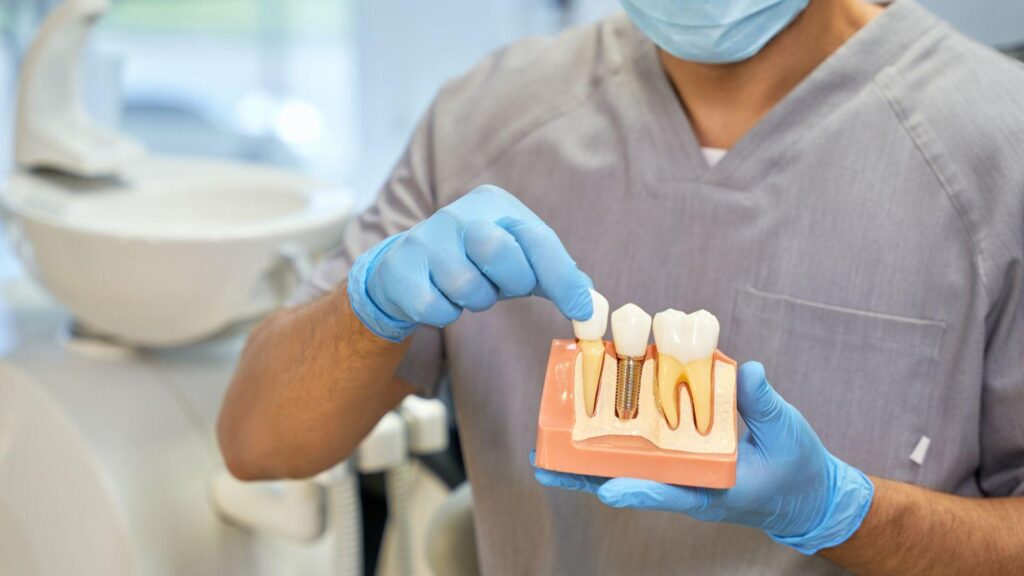
A single tooth implant replaces one missing tooth with a titanium or ceramic post anchored into the jawbone, topped by an abutment and a custom crown. This option preserves adjacent teeth and helps prevent bone loss beneath the missing tooth.
What Is a Dental Implant?
A dental implant is an artificial tooth root surgically placed into the jawbone to support a dental restoration. You get a threaded titanium or zirconia post that integrates with bone through osseointegration, creating a stable base for chewing.
The visible portion is a crown shaped and colored to match your natural teeth. Because the implant stands independently, it does not require altering adjacent teeth as a traditional bridge does.
Typical candidates are adults with finished jaw growth, adequate bone or who can undergo bone grafting, and good oral hygiene. Your medical conditions, smoking status, and medication use (eg, bisphosphonates) influence candidacy and healing.
How Single Tooth Implants Work
The process usually involves three phases: planning, implant placement, and restoration. You start with a clinical exam and imaging (CBCT or periapical X-rays) to assess bone volume and nerve or sinus locations.
During surgery, the clinician places the implant into the prepared osteotomy and may use a healing cap or cover screw. Healing time varies—commonly 3–6 months—for osseointegration before attaching an abutment and crown.
Immediate-load options exist where a temporary crown is attached the same day, but they require specific bone quality and implant stability. After restoration, you maintain the implant with routine brushing, flossing, and regular dental checkups to monitor bone levels and prosthetic fit.
Implant Materials and Design
Implant body materials: titanium (commercially pure or titanium alloy) and zirconia (ceramic). Titanium offers a long track record, high strength, and excellent osseointegration.
Zirconia provides a metal-free option and improved esthetics in thin gingival biotypes. Abutments come as stock or custom, and can be titanium, gold alloy, or zirconia.
Custom abutments give better emergence profiles for anterior esthetics. Crowns attach via cement or screws; screw-retained crowns simplify retrieval, while cemented crowns can offer slightly better esthetics in certain cases.
Implant designs vary by thread pattern, diameter, and surface treatment (eg, sandblasted/acid-etched). These features influence primary stability and bone response.
Your clinician selects design and material based on bone quality, location (front vs molar), and loading expectations.
Exploring Dental Bridges
Dental bridges replace one or more missing teeth by attaching an artificial tooth to adjacent teeth or implants. They differ by support type, materials, preparation needed, lifespan, and when clinicians recommend them.
Types of Dental Bridges
You’ll most commonly encounter four bridge types: traditional (tooth-supported), cantilever, Maryland (resin-bonded), and implant-supported. Traditional bridges use crowns on both adjacent teeth to support a pontic; they suit healthy neighboring teeth that can be prepared.
Cantilever bridges attach to only one adjacent tooth and are used when space or opposite teeth make a second abutment impractical. Maryland bridges bond a metal or ceramic framework to the back of adjacent teeth and require minimal tooth removal, so they work well for front teeth with lower chewing forces.
Implant-supported bridges anchor to dental implants and preserve bone, often recommended when multiple adjacent teeth are missing.
Bridge Construction and Placement
Bridge construction usually begins with tooth preparation and impressions. Your dentist will remove enamel from the abutment teeth for traditional or cantilever bridges, then take digital scans or physical impressions to fabricate the crowns and pontic.
Temporary restorations protect prepared teeth while a dental lab creates the bridge from porcelain, ceramic-fused-to-metal, zirconia, or metal alloys. At the placement visit, the dentist checks fit, bite, and esthetics before cementing the bridge.
Bonded Maryland bridges use a resin cement and require careful etching and bonding of the framework. Implant-supported bridges involve surgical implant placement, a healing period for osseointegration (often several months), then attachment of the prosthesis.
When Bridges Are Recommended
You may be recommended a bridge if you have one or more missing teeth and adjacent teeth are healthy enough to support crowns. Bridges often suit patients wanting faster restoration without implant surgery or when bone volume is insufficient for implants and grafting is not desired.
Choose a Maryland bridge if you want minimal tooth alteration and the replacement is in the front where bite forces are lower. Select implant-supported bridges when you want to avoid altering adjacent teeth and prioritize long-term bone preservation.
Your dentist will evaluate oral health, tooth condition, bite, esthetic goals, and budget to determine the best option for your specific case.
Comparing Aesthetics and Functionality
You’ll see differences in how natural the replacement looks, how well you chew, and whether your speech changes. Focus on color match, gum contours, bite force, and any effects on surrounding teeth.
Natural Appearance and Fit
A single tooth implant replaces both the crown and the root, so the final restoration can mimic the original tooth’s position and the surrounding gum line. The implant crown is custom shaded and shaped; your dentist can match enamel translucency and contours to adjacent teeth.
Because the implant sits in bone, it helps preserve the natural ridge height; this reduces the risk of a sunken or “collapsed” appearance over time. Bridges rely on adjacent teeth for support, which can limit how precisely the pontic (false tooth) sits against the gum.
You may notice slight gaps or food traps if the bridge design doesn’t perfectly follow the gingival scallop. Bridges can still look very good when fabricated well, but long-term soft-tissue changes around the gap can alter fit and require adjustments.
Chewing Efficiency
An implant transfers chewing forces through the titanium post into the jaw, which closely replicates the force pattern of a natural tooth. That stability typically allows you to bite down with near-normal efficiency and reduces overload on neighboring teeth.
Implants perform well for chewing tougher foods like apples or steak. A bridge shares occlusal load with the supporting teeth, which can increase stress on those teeth over time.
You might unconsciously avoid hard, sticky, or crunchy foods if the bridge feels less stable. In cases where supporting teeth are strong, a bridge still restores functional chewing fairly well, but expect some long-term risk of wear or fracture on the abutment teeth.
Speech Impact
Speech depends on tooth position, size, and how the restoration contacts the tongue and lips. Implants let your dentist place a single crown with precise spacing, so consonant sounds (like “s,” “t,” and “th”) usually remain unaffected once you adapt.
Because the implant doesn’t cover neighboring tooth surfaces, it typically preserves normal airflow and articulation. A bridge can alter the oral contours more than an implant, especially if the pontic shape or the crowns on abutment teeth differ from your natural anatomy.
You may notice temporary lisping or altered pronunciation during the first days to weeks. Most people adapt quickly, but if the bridge changes how your tongue contacts teeth, you may need minor reshaping of the restoration for clearer speech.
Longevity and Durability Considerations
Implants and bridges differ in how long they last, how they handle daily wear, and what kinds of repairs they may need. Your choice affects future treatment frequency, costs, and how you care for the restoration.
Expected Lifespan
A single dental implant (implant post plus crown) routinely lasts 20 years or more when you maintain good oral hygiene and attend regular check-ups. The titanium implant itself is usually permanent; the crown may need replacement after 10–15 years depending on material and wear.
A tooth-supported bridge commonly lasts 8–15 years before the pontic or supporting crowns require renewal. Bridges fail sooner if the adjacent abutment teeth develop decay or root problems, because the bridge depends on those teeth for support.
Expect more frequent long-term maintenance with a bridge compared with an implant.
Resistance to Wear
Implant crowns resist decay because they sit on a metal post and not on living tooth structure, but they still face wear, chipping, or fracture—especially if you clench or grind. Porcelain-fused-to-metal and zirconia crowns differ: zirconia offers higher fracture resistance while specific porcelains provide better color match.
Bridges use natural teeth as anchors, so enamel wear and recurrent decay on the abutments can undermine the restoration’s integrity. The pontic itself can resist chewing forces well, but the long-term durability depends on the health of the supporting teeth and how well you control plaque and occlusal stress.
Potential for Repairs or Replacement
If an implant crown chips or fails esthetically, you often replace only the crown while the implant post remains. Minor repairs and crown re-cementation are common and typically simpler than replacing a whole bridge-supported unit.
If an abutment tooth under a bridge fractures, gets infected, or decays, you may need root canal therapy, new crowns, or complete bridge replacement. Repair options can be limited because the bridge is a multi-tooth unit; replacing it usually requires more chair time and greater expense than replacing a single crown on an implant.
Impact on Adjacent Teeth
Choosing between an implant and a bridge affects the teeth next to the gap, the jawbone that supports them, and how your bite distributes force during chewing. Understand how tooth preparation, bone preservation, and shifting risks differ so you can discuss realistic outcomes with your dentist.
Effects of Tooth Preparation
A bridge requires reducing (reshaping) the two teeth adjacent to the missing tooth to create crowns that anchor the pontic. That preparation removes healthy enamel and may expose dentin, increasing sensitivity and the long-term risk of decay or root canal treatment on those teeth.
A single implant leaves adjacent teeth untouched because the implant is placed in the empty socket and holds a crown independently. You avoid altering healthy tooth structure and preserve the natural strength and integrity of neighboring teeth.
When adjacent teeth already have large restorations or crowns, a bridge can be practical because those teeth may need crowns regardless. Discuss the current condition and prognosis of adjacent teeth with your dentist before deciding.
Bone Preservation Benefits
An implant replaces the tooth root and transmits chewing forces into the jawbone, which maintains bone volume and density around the site. Preserved bone supports neighboring teeth and reduces the chance of gum recession next to the gap.
A bridge does not replace the root. Over time, the underlying bone in the edentulous space tends to resorb (shrink), which can create a vertical discrepancy between the pontic and adjacent gums.
That bone loss can compromise long-term support for nearby teeth. If you already show localized bone loss or thin ridge anatomy, your dentist may recommend grafting before implant placement.
Grafting preserves contours that protect adjacent teeth and improve aesthetic outcomes for crowns on neighboring teeth.
Risk of Damage or Shifting
Bridges place extra load and cleaning challenges on the abutment teeth. If the abutments fail from decay, fracture, or periodontal problems, you risk losing those teeth as well.
Bridges also make flossing more difficult, which can increase plaque buildup at margins between the crown and natural tooth. Implants reduce the risk of adjacent tooth damage since they act independently.
However, improper implant placement can injure neighboring tooth roots or alter contact points, so precise imaging and surgical planning are essential to avoid harm. Long-term shifting is more likely next to an empty space left untreated or under a pontic that does not preserve bone.
Teeth adjacent to a well-planned implant generally maintain their position better, preserving occlusion and simplifying future dental work.
Health Requirements and Eligibility
You need sufficient jawbone support, stable oral tissues, and a medical profile that allows surgery and healing. These factors determine whether an implant or a bridge will be safer, more predictable, and longer-lasting for you.
Bone Density and Oral Health
Adequate bone height and width at the missing-tooth site are critical for an implant because the titanium post must osseointegrate with your jaw. Your dentist will order a CBCT or panoramic x-ray to measure bone volume and detect bone defects or sinus proximity.
If bone is thin, you may qualify for bone grafting or a sinus lift; grafting adds months to treatment but often enables implant placement where a bridge would otherwise be chosen. For a bridge, you need healthy adjacent teeth to serve as abutments.
Those teeth must tolerate reduction (crowning) without risking root canals or structural failure. Active gum disease (periodontitis) requires treatment before either option.
Untreated infection increases implant failure risk and can undermine bridge support over time.
Medical Conditions That Affect Suitability
Certain systemic conditions influence healing, infection risk, and long-term success. Controlled diabetes usually permits implants, but poorly controlled blood sugar raises the chance of complications.
Smoking reduces blood flow and bone healing. Heavy smokers have higher implant failure rates and may be advised a bridge or smoking cessation before implant work.
Medications such as bisphosphonates or antiresorptives carry a small risk of osteonecrosis after oral surgery. You must disclose these drugs and consult your physician.
Immune suppression, recent head-and-neck radiation, or bleeding disorders require individualized risk assessment. Your dentist may refer you for medical clearance or choose a bridge if surgical risk is unacceptable.
Age Considerations
Chronological age alone rarely disqualifies you, but skeletal maturity matters. For adolescents whose jaws are still growing, implants can become misaligned over time; dentists typically delay implants until growth completes.
For older adults, bone loss and medical comorbidities become more relevant than age. You can receive implants if bone and systemic health allow, but expect more thorough preoperative evaluation.
If you have limited manual dexterity or cognitive issues that impair oral hygiene, a bridge might be favored because maintenance differs. Implants can be excellent long-term choices when you or a caregiver can maintain proper cleaning.
Treatment Process and Timeline
You will face different steps, timeframes, and short-term restrictions depending on whether you choose an implant or a bridge. Implants require surgery and often months of healing before a final crown; bridges require less surgical work but need alteration of adjacent teeth and typically finish faster.
Surgical Steps for Implants
An implant begins with a consultation, radiographs, and often a CBCT scan to measure bone volume. If you lack sufficient bone, you may need bone grafting; that adds 3–6 months before implant placement.
The surgeon places a titanium post into your jaw under local anesthesia or conscious sedation. Primary healing takes 1–2 weeks for soft tissue.
Osseointegration—the implant fusing with bone—typically takes 3–6 months in the lower jaw and sometimes longer in the upper jaw. After osseointegration, your dentist attaches an abutment and takes impressions for the final crown.
You may receive a temporary crown during healing to maintain appearance and function. Final crown placement completes the process; expect follow-up visits to check fit and bite.
Bridge Placement Procedure
A fixed bridge begins with preparing the two teeth adjacent to the gap by reducing enamel to accept crowns. Your dentist takes impressions or digital scans after local anesthesia and designs the bridge (pontic plus two crowns).
You receive a provisional bridge while the lab fabricates the final restoration, usually within 1–2 weeks. The final appointment involves removing the provisional, trying the permanent bridge for fit and occlusion, and cementing it in place.
Adjustments for bite and contact points are common at this visit. A three-unit bridge typically requires two or three visits over 1–3 weeks if no additional work is needed.
If root canals, periodontal treatment, or additional shaping are necessary, the timeline can extend by weeks.
Recovery and Healing Differences
After implant surgery, expect swelling, minor pain, and a soft-food diet for several days. Use prescribed or over-the-counter analgesics, avoid smoking, and follow oral hygiene instructions.
Bridge recovery is faster: soft-tissue irritation around prepared teeth lasts a few days and sensitivity can persist for weeks. You will need meticulous cleaning under the pontic and along margins; poor hygiene raises decay risk on the supporting teeth.
Maintenance and Aftercare
You will need a consistent daily routine, regular professional visits, and a plan for spotting and addressing problems quickly. Proper care differs slightly between an implant and a bridge, but both need attentive cleaning and timely follow-up.
Daily Cleaning Practices
For a single tooth implant, clean around the implant crown and the gumline using a soft-bristled toothbrush at least twice daily. Use low-abrasive toothpaste and angle the brush to reach the sulcus where plaque accumulates.
Floss once daily with floss designed for implants (waxed floss or a floss threader) or use interdental brushes sized to the embrasure to remove trapped food between the implant and adjacent teeth. Avoid metal picks that could scratch the implant crown.
If you have a bridge, floss beneath the pontic every day using a floss threader or a water flosser to remove debris under the false tooth. A water flosser can also help around implants and under bridges; start on low pressure and increase as tolerated.
Rinse with an antiseptic mouthwash if your dentist recommends it.
Professional Checkups
Schedule a professional exam and hygiene visit every 3 to 6 months depending on your dentist’s judgment and your oral health history. Technicians will probe around implants to check for peri-implant inflammation and will evaluate bridge margins for decay or cement failure.
Have periodic radiographs (typically annually or as recommended) to monitor bone levels around an implant and to check the fit and underlying tooth structure supporting a bridge. Bring a list of any changes you notice—soreness, mobility, or altered bite—so the clinician can compare with prior records.
If you smoke, have diabetes, or a history of periodontal disease, expect more frequent visits. Your dentist may recommend topical antiseptics or professional cleanings with instruments safe for implants.
Managing Potential Complications
Watch for early signs: increasing tenderness, persistent bleeding, swelling, pus, a loose crown or bridge, or a change in your bite. Report these symptoms promptly to reduce the risk of bone loss or failure.
If an implant shows mobility, your dentist will perform tests and radiographs; treatment may include cleaning under the gum, antibiotics, or surgical intervention. For a bridge, loosening often indicates failed cement or decay in an abutment tooth and may require recementation or replacement.
Follow prescribed antibiotic courses and post-procedure instructions after any intervention. Keep records of all implant or bridge components and lab work; this information speeds troubleshooting and replacement if needed.
Cost Factors for Inglewood Patients
You’ll weigh upfront procedure fees, follow-up and replacement costs, and how your insurance will apply to each option. Location-specific fees, provider experience, and any required preparatory treatments will drive most of the difference between an implant and a bridge.
Initial Procedure Expenses
Expect a single implant to cost more upfront than a 3-unit bridge. Typical fees in the U.S. range from about $3,000–$6,000 for one implant and $2,000–$5,000 for a traditional three-unit bridge; local Inglewood clinics may price toward either end depending on lab fees and dentist experience.
Factors that increase initial cost include bone grafting, sinus lifts, extractions, CT scans, and use of a specialist (oral surgeon or prosthodontist). Ask for an itemized estimate so you can compare: surgical fee, implant post, abutment, crown, and imaging.
If you want faster turnaround, a bridge can often be completed in weeks while implants typically require 3–6 months for osseointegration. Faster options may cost more, so confirm timeline versus price before you commit.
Long-Term Financial Considerations
Calculate lifetime cost, not just day-one price. Implants often last 20+ years with low maintenance; bridges commonly need replacement or repair every 10–15 years, which can raise 20-year expenses above the implant route.
Account for routine maintenance (cleanings, possible crown replacement), complication risks (peri-implantitis, bridge failure), and potential need to treat adjacent teeth for bridges. If you currently have healthy neighboring teeth, preserving them with an implant can avoid future restorative costs.
Also include lost time or additional visits if revisions are needed.
Insurance Coverage Insights
Check your dental plan for coverage limits and network restrictions. Many plans cover a portion of a bridge more readily because it’s classified as a standard prosthetic; implants are sometimes labeled as “optional” and receive lower coverage or require prior authorization.
Ask your insurer about lifetime maximums, annual limits, and waiting periods. Request a predetermination of benefits from your dentist — a written estimate of what the insurer will pay.
If coverage is limited, explore financing: in-office payment plans, third-party medical lenders, or health-care credit cards. Also verify whether medical insurance might cover part of the cost when tooth loss results from trauma or certain medical conditions.
Choosing the Right Option with Your Dentist
Talk openly about your goals: aesthetics, chewing function, timeline, and budget. Your priorities help your dentist narrow choices between an implant and a bridge.
Expect a clinical evaluation of your mouth and jaw. This will include X-rays or a CBCT scan to check bone volume, the health of adjacent teeth, and any signs of gum disease that affect treatment success.
Discuss medical and lifestyle factors that influence outcomes. Smoking, diabetes, and medications can change healing and long-term prognosis for implants and bridges.
Ask about the steps, timeframes, and maintenance for each option. Implants require surgery and osseointegration over months; bridges need reshaping of neighboring teeth and more frequent replacement in some cases.
Request a clear cost breakdown and financing options. Compare upfront fees, lab and surgical costs, follow-up visits, and likely long-term replacement or repair expenses.
Use these questions during the visit:
- What does my anatomy suggest is the best option?
- What are the risks and expected lifespan of each choice?
- How will each affect nearby teeth and bone health?
- What is the full timeline from start to final restoration?
Trust evidence and your dentist’s experience when deciding. If uncertain, seek a second opinion or a consult with a specialist (periodontist or prosthodontist) to confirm the recommended plan.
Long-Term Outcomes and Patient Experiences
You can expect different long-term results with implants and bridges based on biology and maintenance. Implants replace the root and crown, which helps preserve bone and provides stability.
Studies commonly report high 10-year survival rates for well-selected implants. Bridges work well short-term but rely on adjacent teeth, which can increase risk to those teeth over time.
Patients often report high satisfaction with implant esthetics and chewing function, especially when bone and gum health are good. Recovery takes longer and involves surgery, but many patients say the final feel closely matches a natural tooth.
With a bridge, you get faster restoration and no implant surgery, which some patients prefer. Consider long-term costs and maintenance.
Implants typically cost more up front but may require less replacement. Bridges may need replacement or repairs sooner, and adjacent tooth issues can add future treatment costs.
Both options require good oral hygiene and regular dental visits to maintain outcomes. Common patient concerns include treatment time, surgical anxiety, and out-of-pocket cost.
Ask your Inglewood dentist about local success rates, what to expect during healing, and whether bone grafting or crown work on neighboring teeth will affect your plan. Use that information to match the option to your priorities and lifestyle.